Reduce Returns and Increase Revenue with Customer Feedback Insights
Learn how to leverage customer feedback to increase loyalty, reduce return rates, and increase net revenue.
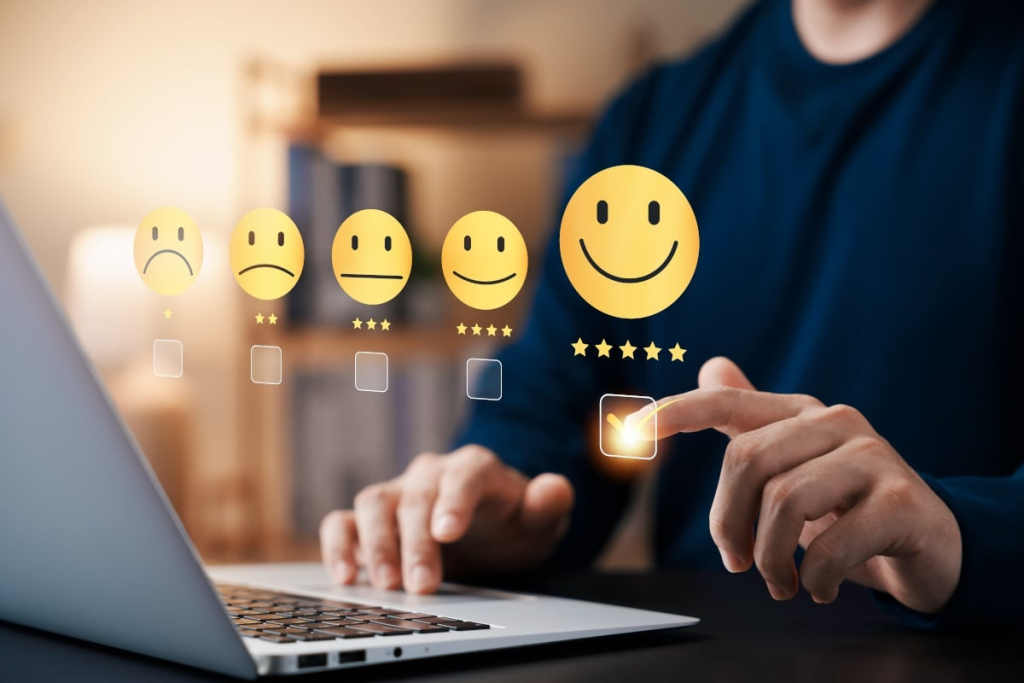
From star-based ratings to short testimonials, customer feedback provides information shoppers can use to make purchase decisions. Research has even shown that “91 percent of people regularly or occasionally read online reviews, and 84 percent trust online reviews as much as a personal recommendation.”
However, it would be a mistake to celebrate positive reviews and nothing more. For example, strategically addressing negative reviews can lead to higher loyalty. Customer feedback from return transactions can be used to improve products, enhance customer experiences, and reduce returns overall.
Basically, when customer feedback is ignored, it can deter new buyers and leave a significant amount of revenue and opportunity on the table. Read on and discover how businesses can use customer feedback to increase conversion rates, reduce return rates, and increase net revenue.
Product Detail Pages with Customer Reviews Have Higher Conversion Rates
With multiple retailers, brands, and even sales channels to choose from, the decision-making process has become more complex for shoppers. As a result, many now put more time and energy into assessing a product before purchasing. That means actually reading product descriptions, assessing images, and, you guessed it, reading customer reviews.
One report found that “91.1 percent of those who read reviews say they play a decisive role in how they spend their money.” Consequently, product detail pages that display customer reviews tend to have much higher conversion rates compared to those without reviews. Another survey from 2017 found that “The purchase likelihood for a product with five reviews is 270% greater than the purchase likelihood of a product with no reviews.”
So, what is it about customer reviews that make shoppers so much more likely to purchase a product?
Customer Testimonials Promote Trust and Help Reduce Product Returns
One of the foundational reasons reviews and testimonials have such a powerful influence is because they promote trust and authenticity.
For online shoppers who can’t assess a product in person, reviews that verify quality are vital for purchasing decisions. Since customer reviews are often perceived to be more trustworthy than what a brand might say about itself, positive reviews give shoppers confidence in their purchase since there’s no conflict of interest.
Additionally, while it may seem unnecessary, reviews that verify basic product features can help brands improve their credibility. Even when features like fit and color have already been stated in the description, customer reviews that confirm these details help shoppers trust that a brand is accurately representing their products.
Not only does this help shoppers feel that they can trust a brand or retailer, but it also helps customers make more informed decisions. When they see testimonials describing specific aspects of a product, this can help them avoid products they might end up returning.

Reduce Returns and Promote Loyalty with Insights from Negative Reviews
Removing negative reviews from product pages may be tempting, but there is a wealth of opportunity there that businesses can’t afford to overlook.
While some negative reviews discuss issues that aren’t likely to occur again, seeing many negative reviews regarding the same issue could mean there’s a problem that needs to be addressed. For example, if many reviews discuss how a piece of furniture arrived damaged, it may be beneficial to assess shipping carriers or packaging designs.
In this scenario, ignoring negative reviews means missing an opportunity. However, by cross-referencing returns analytics with customer feedback data, businesses can pinpoint specific issues and develop an action plan to resolve them. That means reducing returns and increasing net revenue.
If that wasn’t enough, responding to negative reviews gives businesses an opportunity to engage with customers and promote loyalty. Plus, shoppers can be wary of product pages with no negative reviews, which leads to them questioning a brand’s authenticity.
One study revealed that 82% of shoppers who read reviews are specifically looking for negative reviews. While that may be alarming, BigCommerce found that shoppers “spend five times as long on sites when interacting with negative reviews, with an 85% increase in conversion rate.”
Use Reviews to Target Specific Customer Segments
Reviews can be particularly beneficial when they include important product features that are relevant to specific customer groups. This could include customer groups related to size, activities, product use, etc.
For example, a customer may explain that the waist on a pair of jeans fit perfectly, but they returned them because the length was too short due to their 5’9” height. While this may not sound ideal, another shopper may find that pair of jeans is the perfect size since they’re a few inches shorter than the other customer.
In addition, the data from reviews can help businesses develop valuable insights. For instance, the right returns management platform can analyze unstructured review data. That means the initial negative review from the above example would trigger an automated insight that could be cross-referenced with other returns analytics. The information from this can then be used to develop a product improvement plan.
So, not only would that first review provide relevant information for the other customer, but it would also give the brand valuable data that can be used to improve products, reduce product returns, and increase net revenue.
Identify Customer Review Trends and Opportunities with Returnalyze
Regardless of whether customer reviews come in the form of star rankings, surveys, or open-ended feedback, the data from these responses can be an invaluable source of information. While analyzing such a large amount of data may feel overwhelming, a partnership with Returnalyze comes with the data experts and returns management platform that can help.
The Returnalyze Intelligent Dashboard gives you access to a variety of datasets that can be cross-referenced with data from customer reviews to uncover important trends and opportunities. Plus, our data experts will be there every step of the way to help you develop a data-informed action plan.
Ready to uncover valuable insights from your customer feedback? Schedule a demo or contact our team today and let’s talk ecommerce returns solutions.